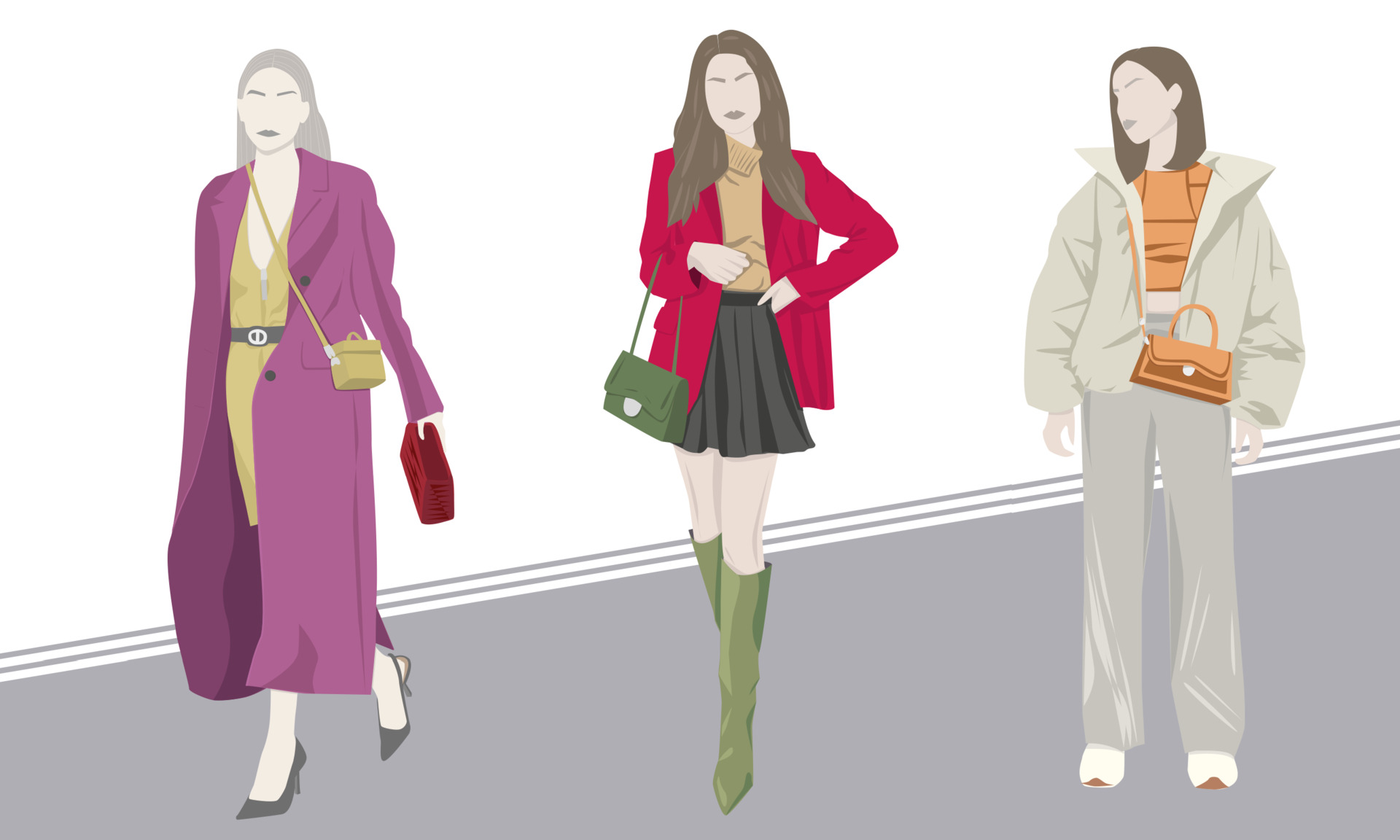
ARCHITECTURAL DESIGN & SILHOUETTE THEORY
Architectural Design & Silhouette Theory serves as the conceptual engine. It moves beyond simple "clothing" to treat the garment as a sculptural extension of the human form.
Students learn to manipulate the "negative space" between the body and the fabric to create iconic outer shapes. This module explores how to project volume away from the anatomical frame to create a specific brand identity or artistic statement.
Instructor Profile
Prerequisites
Description
Course Topics & Modules
1. The Geometry of the Silhouette
The "Big Five" Silhouettes: A deep dive into the historical and modern logic of the Hourglass, A-Line, I-Line (Sheath), Wedge (Inverted Triangle), and Egg (Ovoid) shapes.
Proportion & Scale: Analyzing the relationship between garment volume and anatomical scale. Students learn how to use "Golden Ratio" proportions to create visual harmony or intentional discord.
Brand DNA & Shape: Studying how iconic houses (like Balenciaga or Comme des Garçons) use consistent silhouettes to establish an unmistakable brand identity.
2. Negative Space & Volume Projection
The Anatomy of Air: Mapping the "Void"—the space between the skin and the fabric. Students learn where to "anchor" a garment to the body and where to project it away.
Internal Support Structures: Introduction to the "Architecture" of volume: utilizing crinolines, boning, shoulder pads, and stiffened interfacings to hold shapes that defy gravity.
Tension vs. Release: Designing "Stress Points" (where the garment fits tight) and "Release Points" (where the volume begins) to control the flow of the silhouette.
3. Narrative & Emotional Impact of Form
Psychology of Shape: Understanding how sharp, angular silhouettes project authority and protection, while rounded, soft silhouettes project approachable elegance.
Historical Deconstruction: Analyzing how historical shapes (e.g., Victorian bustles or 1950s New Look) can be deconstructed and modernized for 2026 avant-garde design.
Asymmetry & Balance: Experimenting with off-center volumes and irregular silhouettes while maintaining the structural stability of the garment on the anatomical frame.
4. Conceptual Mapping (Pre-Patterning)
The Silhouette Sketch: Learning to draw "The Outline" before the details. Mastering the ability to communicate a design's total mass in a single, bold graphic sketch.
3D Form Mock-ups: Using paper or stiff calico to create "Spatial Prototypes"—non-wearable models that test how far a volume can be projected from the body before losing structural integrity.
Learning Outcome
By the end of this course, students will be able to articulate a design's "Spatial Strategy." They will have moved from drawing "clothes" to designing "structures," possessing a clear visual blueprint of the silhouette's mass and volume. This conceptual map is the prerequisite for the mathematical precision of the next module: Pattern Engineering & Size Grading.
Course Rules
Ready to Enroll?
Preserve your seat by filling in the application form, upload a sample of your artwork, or provide your Artstation account for revision. Kindly, Do Not pay unless you have a confirmation message from us that you are accepted in this course.