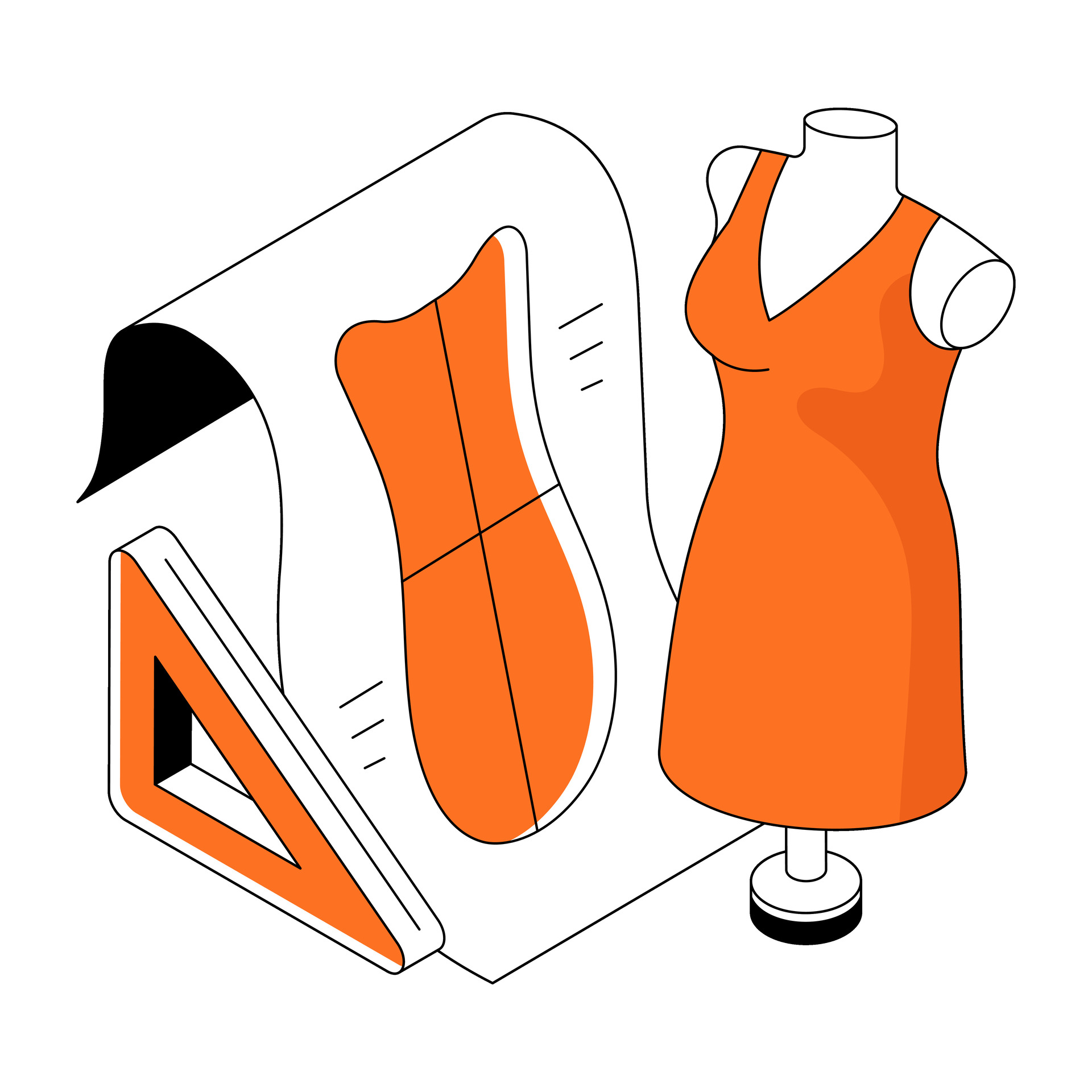
DRAPING & PERFORMANCE ERGONOMICS
Draping & Performance Ergonomics is the art of "sculpting with cloth." While pattern making relies on 2D formulas, draping allows the designer to see, touch, and manipulate volume in real-time on a 3D mannequin. In this module, students explore the organic relationship between fabric grain and the human frame. By integrating "Performance Ergonomics," the course ensures that these draped sculptures are not merely static art, but high-functioning garments. Designers learn to engineer "comfort in motion," analyzing how joints rotate and skin stretches to create clothes that provide a flawless fit while allowing for the full physical demands of the modern wearer's lifestyle.
This course transitions from the mathematical rigidity of flat patterns to the fluid, tactile reality of fabric interacting with a 3D anatomical form in motion.
Instructor Profile
Prerequisites
Description
Course Topics & Modules
1. The Physics of Fabric & Grain
Grainline Orientation: Understanding the structural difference between Lengthwise, Crosswise, and Bias drape. Students learn how to use the "45-degree Bias" to create garments that cling to anatomical curves.
Fabric Weight & Hand: Analyzing how different material properties (from stiff canvas to fluid silk) dictate the possible silhouettes and drape "behavior."
The Muslin/Toile Process: Mastering the professional method of pinning, marking, and truing fabric on the dress form before transferring it to paper patterns.
2. Structural Draping Techniques
Anatomical Darts & Tucks: Creating shape by manipulating fabric around the bust, waist, and hips without the use of flat-pattern formulas.
Advanced Volumes: Draping complex design elements such as cowls, peplums, cascading ruffles, and architectural folds directly on the form.
Internal Support Integration: Learning to drape over understructures (padding, corsetry, or shoulder forms) to maintain the intended Silhouette Theory.
3. Performance Ergonomics & Kinetic Fit
The "Ease" Factor: Defining the difference between "Design Ease" (style) and "Wear Ease" (function). Students calculate the minimum room required for breathing and basic movement.
Range of Motion (ROM) Analysis: Studying joint rotation at the shoulder and crotch. Designers learn to add "Action Gussets" and pivot points so the garment doesn't "ride up" or restrict movement.
Dynamic Stress Points: Identifying where a garment is likely to tear or pull during activity and reinforcing those areas through ergonomic seam placement.
4. Technical Refinement (From Form to Pattern)
Digitizing the Drape: Utilizing 3D scanners or CLO 3D to convert a physical draped muslin into a digital technical file.
The Balance Test: Learning to evaluate a draped garment for "hang"—ensuring side seams are perpendicular to the floor and the garment is perfectly centered on the anatomical frame.
2026 Learning Outcome
By the end of this course, students will be able to execute complex, high-performance designs that cannot be achieved through flat-patterning alone. They will possess the tactile skill to manipulate fabric intuitively and the ergonomic knowledge to ensure their creations are "performance-ready" for the global market.
For advanced ergonomic data, students refer to the NASA Anthropometry and Biomechanics guidelines or the Human Factors and Ergonomics Society (HFES).
Course Rules
Ready to Enroll?
Preserve your seat by filling in the application form, upload a sample of your artwork, or provide your Artstation account for revision. Kindly, Do Not pay unless you have a confirmation message from us that you are accepted in this course.