SPATIAL LOGIC & BEHAVIORAL PSYCHOLOGY
This introductory course focuses on the fundamental "grammar" of design. Students learn to see space as a collection of geometric and atmospheric elements.
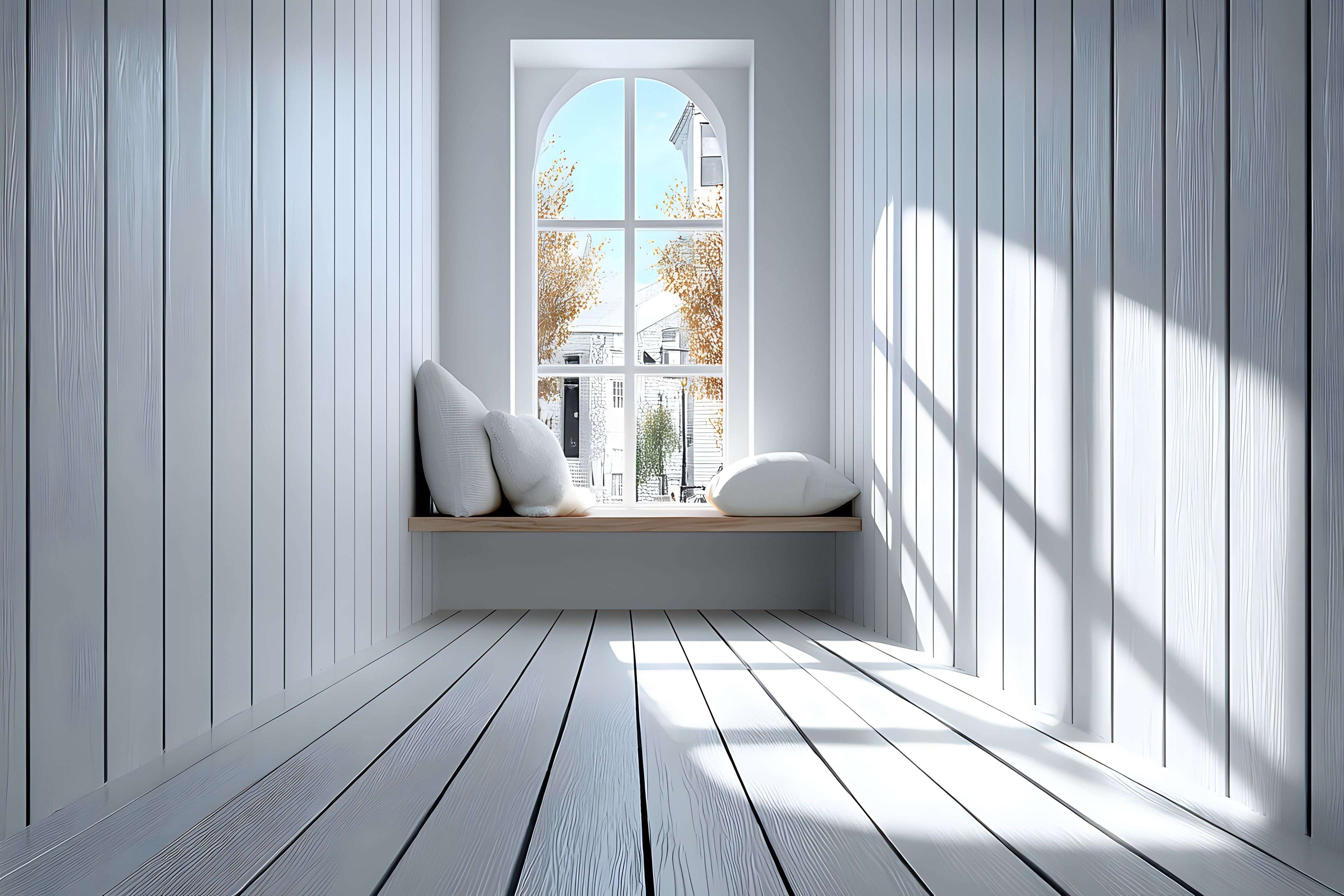
Behind every successful interior lies a hidden logic that dictates how we feel, move, and interact. This course bridges the gap between architectural form and human emotion. It moves beyond "decorating" to explore the science of how vertical lines can provide a sense of stability, how curves evoke comfort, and how the manipulation of light and shadow can psychologically expand or contract a room. By understanding the "grammar" of space, designers learn to predict and influence the behavioral response of any occupant.
Instructor Profile
Prerequisites
NONE
Description
Core Concepts: Mastery of the 7 elements (space, line, form, light, color, texture, and pattern) and the 7 principles (balance, rhythm, emphasis, proportion, scale, unity, and contrast).
Key Learning: How to create visual interest and focal points within a room.
Practical Work: Creating 2D and 3D abstract compositions to demonstrate concepts like symmetrical vs. asymmetrical balance.
The science of the color wheel (primary, secondary, tertiary), color harmonies (analogous, monochromatic, complementary), and the "Munsell Color System."
Key Learning: Understanding the psychological effects of color—how "cool" tones can calm a healthcare space while "warm" tones stimulate appetite in a restaurant.
Practical Work: Developing a physical "Material Board" (Mood Board) that combines fabric swatches, paint chips, and floor finishes to evoke a specific mood.
Learning Objectives
Analyze the psychological impact of geometric forms (lines, shapes, and volumes) on the human subconscious.
Decipher the visual language of a space to identify how architectural elements direct attention and movement.
Master the interplay of light and shadow as a tool for defining spatial boundaries and emotional depth.
Synthesize abstract design principles to solve real-world behavioral challenges within an interior environment.
Topics Covered
Visual Elements of Space (2 Hours): Detailed study of lines (horizontal, vertical, diagonal) and shapes; their physiological effects on the human eye and heart rate.
The Psychology of Form: How "Point, Line, and Plane" create visual weight and focal points that command user behavior.
Light & Shadow Dynamics (1 Hour): The study of "Chiaroscuro" in interiors—using contrast to create privacy, drama, or a sense of safety.
Architectural Behaviorism: Exploring how spatial layout affects social interaction, productivity, and stress levels.
Visual Perception Theories: Introduction to Gestalt Principles (Proximity, Similarity, Continuity) and their application in interior harmony.
Learning Outcomes
Diagnostic Ability: The student will be able to audit any interior and identify the specific visual triggers causing comfort or agitation.
Intentional Composition: Ability to draft spatial arrangements that intentionally guide a user’s eye and physical path through a room.
Atmospheric Control: Proficiency in using shadow and light as "invisible walls" to define functional zones without the need for physical partitions.
Technical Justification: The student can professionally defend their design choices using behavioral data rather than subjective taste.
Course Rules
· Attendance Policy: Participation is mandatory; exceeding a 15% absence rate will result in an automatic failure of the course.
· Grading Criteria: Final grades are calculated based on a combination of consistent attendance, completion of practical assignments, and the quality of the final project.
· Punctuality & Professionalism: Arriving late or leaving early frequently is often penalized as a partial absence. Students are expected to treat the classroom like a professional studio, maintaining high standards of conduct and communication.
· Submission Deadlines: Late submissions for assignments or the final project are generally not accepted or are subject to significant grade deductions unless an official medical excuse is provided.
· Originality & Academic Integrity: All motion assets, animations, and project files must be the student's original work. The unauthorized use of AI-generated assets or "stealing" project templates without significant modification is strictly prohibited and can lead to immediate disqualification.
· Hardware & Software Requirements: Students must ensure their personal workstations meet the 2026 technical specifications for rendering (typically requiring high-end GPUs and 32GB+ RAM) to prevent project delays during the final rendering phase.
· In-Class Engagement: Active participation in peer critique sessions is often a mandatory component of the "Attendance" grade, requiring students to provide constructive feedback on others' work.
Ready to Enroll?
Preserve your seat by filling in the application form, upload a sample of your artwork, or provide your Artstation account for revision. Kindly, Do Not pay unless you have a confirmation message from us that you are accepted in this course.